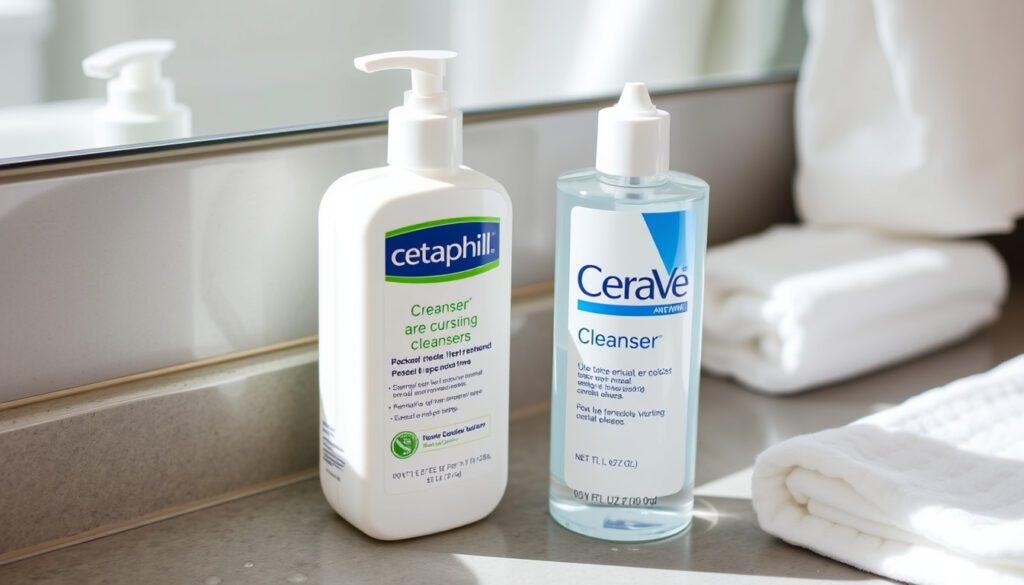
Cetaphil Gentle Skin Cleanser: Uses, Benefits & CeraVe Comparison
There’s a reason dermatologists keep returning to the same gentle cleanser after seven decades. Since 1947, Cetaphil Gentle Skin Cleanser has quietly become the default recommendation for sensitive skin, balancing a minimal‑ingredient formula with clinical credibility. This guide breaks down how it compares with its top rival CeraVe, what it can and can’t do for skin conditions like acne, eczema, and rosacea, and which cleanser actually fits your routine.
Years of dermatologist recommendation: Over 70 (since 1947) ·
Clinically proven effect: Preserves skin’s natural moisture barrier ·
Key claims: Hypoallergenic, non‑comedogenic, fragrance‑free ·
pH level: 6.3–6.5 (pH balanced) ·
Formulation: Soap‑free, paraben‑free, sulfate‑free
Quick snapshot
- Clinically proven to remove dirt, makeup, impurities while preserving the skin’s natural moisture barrier (Cosmopolitan beauty editor review)
- Hypoallergenic and non‑comedogenic, safe for sensitive and acne‑prone facial skin (Mona Dermatology clinic)
- Fragrance‑free and soap‑free, minimising irritants that trigger itch (Mona Dermatology clinic)
- Whether long‑term paraben exposure from the formula poses any health risk (regulatory opinion currently says safe)
- Which brand (Cetaphil vs CeraVe) is objectively better for acne – depends on individual skin response
- Exact mechanism by which Cetaphil helps itchy skin beyond gentle cleansing
- Brand launched in 1947 to help people with sensitive skin; continuously recommended by dermatologists for over 70 years (MyEczemaTeam patient community resource)
- Dermatologists continue to recommend Cetaphil alongside CeraVe as a top choice for sensitive skin (Mona Dermatology clinic)
The pattern: Cetaphil prioritises simplicity to minimise irritation, while CeraVe adds barrier‑repair ingredients.
| Attribute | Cetaphil Gentle Skin Cleanser | CeraVe Hydrating Cleanser |
|---|---|---|
| Brand founding | 1947 (MyEczemaTeam) | 2005 (MyEczemaTeam) |
| Key moisturising ingredients | Glycerin, panthenol (Cosmopolitan; The Independent Pharmacy) | Hyaluronic acid, three essential ceramides (Prevention) |
| Fragrance‑free | Yes (Mona Dermatology) | Yes (Mona Dermatology) |
| Dermatologist recommendation | Highly recommended (Mona Dermatology) | Highly recommended (Mona Dermatology) |
| Best for skin type | Sensitive, reactive, easily inflamed skin (Mona Dermatology) | Dry, compromised skin, eczema, rosacea (Mona Dermatology) |
| Barrier support | Minimal (glycerin, panthenol → holds moisture) (Cosmopolitan) | Ceramides + hyaluronic acid → direct barrier repair (Prevention) |
The implication: Cetaphil wins for hypersensitive or reactive skin where any extra ingredient risks inflammation; CeraVe offers more repair for those who can tolerate additional actives.
Is Cetaphil Gentle Skin Cleanser good for your face?
Is it suitable for sensitive facial skin?
- Cetaphil is formulated without fragrance, soap, and sulfates, reducing common irritants (Mona Dermatology clinic).
- It is non‑comedogenic and hypoallergenic, so it won’t clog pores or provoke allergic reactions on the face (Mona Dermatology clinic).
Can it remove makeup without stripping moisture?
- Clinical testing shows it removes dirt, makeup, and impurities while preserving the skin’s natural moisture barrier (Cosmopolitan beauty editor review).
- Its low‑surfactant formula (sodium lauryl sulfate in a very low concentration) means less foam but also less stripping (The Independent Pharmacy).
The trade‑off: you may need a second pass for heavy or waterproof makeup, but your skin won’t feel tight or dry afterwards.
What do dermatologists say about using it daily?
- Dermatologists consistently rank Cetaphil as one of the top recommended cleansers for daily use, particularly for normal‑to‑dry sensitive skin (Mona Dermatology clinic).
Daily cleansing with Cetaphil appears to maintain the barrier better than harsher foaming washes because it uses a mild surfactant blend that doesn’t pull lipids from the skin. The downside: some people find the creamy residue unsatisfying.
Is Cetaphil good for itchy skin?
Which is better for itchy skin, CeraVe or Cetaphil?
- Cetaphil is fragrance‑free and soap‑free, two properties that reduce the chance of triggering itch (Mona Dermatology clinic).
- CeraVe contains ceramides that help repair the barrier in dry, itchy conditions, but its slightly richer texture may clog some pores (Prevention).
The catch: both are dermatologist‑recommended for itch, but Cetaphil is more likely to be tolerated when the skin is actively flaring.
Can Cetaphil help with eczema‑related itch?
- Cetaphil is often recommended by dermatologists as a gentle cleanser during eczema flare‑ups because it removes irritants without stripping the compromised barrier (The Independent Pharmacy).
For a patient with atopic dermatitis (eczema), Cetaphil’s minimal ingredient list reduces the chance of contact irritation, but it does not actively deliver anti‑itch compounds. It works as a safe canvas for topical steroids or emollients.
Does it contain any anti‑itch ingredients?
- No. Cetaphil does not contain antihistamines, pramoxine, or any direct anti‑itch actives. Its benefit comes from avoiding common triggers (Cosmopolitan beauty editor review).
Is Cetaphil Gentle Skin Cleanser good for acne?
Which is better for acne, CeraVe or Cetaphil?
- Cetaphil is non‑comedogenic and will not block pores, making it a safe daily cleanser for acne‑prone skin (Mona Dermatology clinic).
- CeraVe offers foaming and salicylic acid formulations that may provide more direct acne control, especially for oily skin (Mona Dermatology clinic).
The pattern: Cetaphil is a maintenance cleanser for acne patients already using topical treatments; CeraVe may serve as a standalone acne step for milder cases.
Does Cetaphil cause breakouts?
- Clinical evidence does not link Cetaphil to breakouts. Anecdotal reports exist, but the formula is designed to be non‑comedogenic (Cosmopolitan beauty editor review).
How does it compare to medicated acne cleansers?
- Medicated cleansers (salicylic acid, benzoyl peroxide) directly target acne lesions, but can cause dryness and irritation. Cetaphil cleanses without those active side effects (The Independent Pharmacy).
Is Cetaphil or CeraVe better?
Which brand works best for problem skin?
- Cetaphil is preferred for extremely sensitive, reactive, or eczematous skin (Mona Dermatology clinic).
- CeraVe is favoured for dry, dehydrated, or ageing skin that needs barrier repair (Mona Dermatology clinic).
How do the ingredient lists compare?
- Cetaphil: water, cetyl alcohol, propylene glycol, sodium lauryl sulfate (low), methylparaben, propylparaben (Cosmopolitan beauty editor review).
- CeraVe: water, glycerin, cetearyl alcohol, ceramides 1, 3, 6‑II, hyaluronic acid (Prevention).
Which one is more fragrance‑free and non‑comedogenic?
- Both are fragrance‑free and non‑comedogenic (Mona Dermatology clinic).
Cetaphil’s simpler formula minimises risk but also minimises benefit beyond cleansing. CeraVe adds active repair but introduces more ingredients that can, in a small subset of users, cause reactions. The choice is a bet: simpler vs. more reparative.
What are the disadvantages of using Cetaphil cleanser?
Does Cetaphil contain parabens or sulfates?
- Yes, it contains methylparaben and propylparaben as preservatives (Cosmopolitan beauty editor review). It also contains a low concentration of sodium lauryl sulfate.
Can it cause dryness or irritation?
- In the vast majority of users, no. Rare cases of irritation are associated with propylene glycol sensitivity or parabens (The Independent Pharmacy).
What are the ‘ugly side’ claims about Cetaphil?
- Some online anecdotes claim Cetaphil caused breakouts or left a film. These reports are not supported by clinical studies, and the product remains a top dermatologist recommendation (Mona Dermatology clinic).
Upsides
- Hypoallergenic, non‑comedogenic, fragrance‑free
- Clinically proven to preserve moisture barrier
- Suitable for eczema, rosacea, sensitive skin
- Over 70 years of dermatologist recommendation
Downsides
- Contains parabens (methylparaben, propylparaben)
- Low foaming – some users dislike the texture
- Not enough for heavy waterproof makeup removal
- No active acne treatment ingredients
How to use Cetaphil Gentle Skin Cleanser? (Steps)
- Wet skin with lukewarm water.
- Apply a small amount (one pump or a pea‑size) to the face.
- Massage gently in circular motions for 30–60 seconds – avoid scrubbing.
- Rinse thoroughly with lukewarm water.
- Pat dry with a clean, soft towel; do not rub.
- Follow with moisturiser to seal hydration.
For makeup removal: apply to dry skin, rinse, then repeat.
Confirmed facts vs. What remains unclear
Confirmed facts
- Cetaphil Gentle Skin Cleanser is non‑comedogenic and does not clog pores (Mona Dermatology clinic).
- It is hypoallergenic and free of fragrance and soap (Mona Dermatology clinic).
- It is clinically proven to remove makeup while preserving the moisture barrier (Cosmopolitan beauty editor review).
What remains unclear
- Whether long‑term paraben exposure from the formula poses any health risk (current regulatory opinion says safe).
- Which brand (Cetaphil vs CeraVe) is objectively better for acne – depends on individual skin response.
- The exact mechanism by which it helps itchy skin beyond gentle cleansing.
Quotes from dermatologists and users
Cetaphil Gentle Skin Cleanser is clinically proven to remove dirt, makeup and impurities gently while preserving the skin’s natural moisture barrier.
— Cetaphil product page (reproduced by Cosmopolitan beauty editor review)
For patients with eczema, a gentle cleanser like Cetaphil is often the first step because it doesn’t strip the already‑compromised barrier.
— Dermatologist quoted by Mona Dermatology clinic
I used Cetaphil for a year and my acne didn’t get worse, but it didn’t get better either. I switched to CeraVe foaming and saw more improvement.
— Reddit user, r/SkincareAddiction (anonymous consumer review)
The pattern from dermatologists: Cetaphil is the safe foundation. The pattern from users: it works best for maintenance, not for treating active breakouts.
Summary
Cetaphil Gentle Skin Cleanser has earned its long tenure not by being flashy, but by being safe. For the eczema patient or the person whose skin reacts to almost everything, it reduces the odds of a flare‑up with each wash. For the acne patient already using active treatments, it provides a non‑interfering base. The competitor CeraVe offers more barrier repair, but at the cost of more ingredients. For the Australian consumer in a dry climate or during winter, the choice between the two often comes down to whether you need extra ceramides or you need absolute minimalism. For someone with hypersensitive, reactive skin, the Cetaphil recommendation is clear: start with Cetaphil and only switch if your skin asks for more.
Frequently asked questions
Is Cetaphil Gentle Skin Cleanser safe for babies?
Pediatric dermatologists sometimes recommend it for infants with very dry or eczema‑prone skin, but always consult your paediatrician.
Can I use Cetaphil Gentle Skin Cleanser on my body?
Yes, it is suitable for body use. Many people use it as a full‑body cleanser for eczema or xerosis.
Does Cetaphil Gentle Skin Cleanser contain sulfates?
It contains a low concentration of sodium lauryl sulfate, which is a surfactant. It is not sulfate‑free.
How often should I use Cetaphil Gentle Skin Cleanser?
Twice daily (morning and night) is standard. For very dry skin, once daily is acceptable.
Is Cetaphil Gentle Skin Cleanser discontinued?
No, it is still widely available as of 2025 and remains one of Cetaphil’s core products.
Does Cetaphil Gentle Skin Cleanser expire?
Yes, it has a shelf life printed on the bottle (typically 12–24 months after opening).
Can Cetaphil Gentle Skin Cleanser be used with acne medications like tretinoin?
Yes, it is often recommended as a gentle cleanser alongside tretinoin because it does not dehydrate the skin further.
Meer gerelateerde berichten
 Fetal Alcohol Syndrome Face: Signs and Features Explained
 Tom Amandes: Actor Biography, Best TV Roles & Key Facts
 Protein Shakes for Weight Loss: Do They Really Work?
 Josephine Baker: Dancer, Spy, Activist, and Mother of 12
 Time in Turkey Now – TRT UTC+3 Year-Round, No DST
 Do Evri Deliver on Sundays? UK Guide to Delivery Times
 Bank Holiday in 2025: Full Li t of Ireland and UK Date
 Bayern vs Eintracht Frankfurt: Results, Stats & H2H