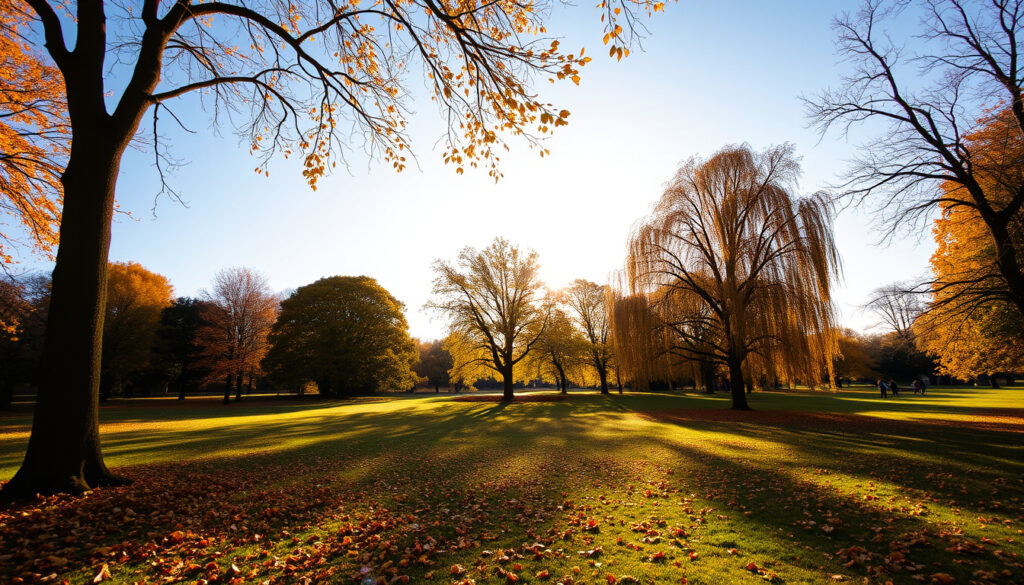
Indian Summer UK Weather: Definition, History & Forecast
There’s a reason the phrase “Indian summer” makes people check the forecast with more than usual interest: a few unseasonably warm October days can spark talk of barbecues, beach trips, and whether the seasons are shifting. But behind the cozy name lies a precise meteorological definition, a contested history, and a future shaped by a warming climate.
Definition: Unseasonably warm, dry weather in autumn (October–November) ·
Typical Temperature: 20°C to 25°C in southern UK ·
Highest UK Temperature: 40.3°C (Coningsby, 19 July 2022) ·
1976 Heatwave Duration: 15 consecutive days above 30°C ·
2026 Global Temperature Rank: Among the four hottest years on record (Met Office prediction) ·
Term Origin: Late 18th century, Mohawk region of North America
Quick snapshot
- UK reached 40.3°C in July 2022 (Met Office, the UK’s national weather service)
- Indian summers are unseasonably warm autumn periods after the first frost (Encyclopaedia Britannica, a leading reference publisher)
- Met Office predicts 2026 will be among the top four hottest years globally (Met Office)
- Whether an Indian summer will occur in 2026 in the UK – no long-range forecast can confirm that far ahead (Met Office)
- Exact temperature extremes for UK summer 2026 – climate models project ranges, not daily values (Met Office)
- Whether the term “Indian summer” is universally considered offensive – usage differs by region and generation (AP Stylebook, the journalism industry’s style guide)
- Whether the September 2025 forecast Indian summer will actually occur – long-range forecasts cannot confirm that far ahead (Met Office)
- Late 18th century – first recorded use of “Indian summer” in North America (Encyclopaedia Britannica)
- 23 June – 16 July 1976 – UK heatwave: 15 days above 30°C (Met Office)
- 19 July 2022 – UK highest temperature: 40.3°C (Met Office)
- 2026 – predicted among the four hottest years on record (Met Office)
- 40°C days in the UK expected to become more frequent by 2050 (BBC Weather, a trusted UK broadcast meteorology service)
- 2026 UK summer likely to feature heatwaves, but exact timing uncertain (BBC Weather, a trusted UK broadcast meteorology service)
- Climate change increases the odds of warm autumn spells that meet the Indian summer definition (BBC Weather, a trusted UK broadcast meteorology service)
Six key facts, one pattern: the UK’s autumn weather is a mix of seasonal norms and extremes that are becoming harder to predict.
| Fact | Value |
|---|---|
| Typical Indian summer temperature | 20–25°C |
| Latest UK record high | 40.3°C (2022) |
| 1976 heatwave duration | 15 days |
| Predicted 2026 global temperature rank | Top 4 |
| Term origin | 18th century Mohawk region |
| Alternative term | Second summer |
What is classed as an Indian summer in the UK?
The Met Office, the UK’s national weather service, defines an Indian summer as “a warm, calm spell of weather occurring in autumn, especially in October and November.” The key condition: it must follow the first frost of the season — a sign that the growing season has ended and a brief return to summer-like warmth is unexpected (Met Office).
What are the typical conditions for an Indian summer?
- Temperatures typically reach 20–25°C in southern parts of the UK
- The weather is dry and settled, with light winds and clear or hazy skies
- The phenomenon is associated with a stable area of high pressure that lingers over the country (University of Maryland ESSIC, a climate research centre)
Is it warm for October in the UK?
Yes. The average high for London in October is around 15°C. A day reaching 22°C in mid-October would be 7 degrees above the norm — a gap that feels like a brief return to summer. But not every warm autumn day qualifies as an Indian summer. The University of Maryland ESSIC warns that the term is often “loosely applied to any warmer-than-average period during autumn, even when it does not match the stricter historical definition” (University of Maryland ESSIC).
Without a preceding frost, a warm October week is just a pleasant weather anomaly. The Indian summer label demands that break between seasons.
The implication: calling a warm spell an “Indian summer” requires a timing that many UK autumns don’t provide. The term is descriptive, not predictive.
Why is it called an Indian summer?
The phrase landed in England during the 19th century, but its roots are American. According to Encyclopaedia Britannica, the term originated in New England and probably arose from Indigenous people’s practice of gathering winter stores at that time. The first recorded use dates to the late 18th century in the Mohawk region of North America (The Phrase Finder, a phrase etymology resource).
What is the origin of the term Indian summer?
- American settlers observed that Native American harvest seasons coincided with warm autumn spells
- Alternative older British names include “All-hallown summer” and “Old Wives’ summer” (Encyclopaedia Britannica)
- In North America, “Second Summer” is a common synonym (Farmers’ Almanac, a long-running almanac publisher)
Is the term Indian summer offensive?
Some speakers find the term problematic because it uses “Indian” as a modifier for a natural phenomenon — a practice that echoes colonial naming conventions. The AP Stylebook, the journalism industry’s style guide, recommends caution and alternative wording such as “second summer” or “autumn warm spell” (AP Stylebook). The Met Office continues to use the term but acknowledges the debate.
Media outlets in the UK and US are increasingly shifting toward “second summer” or simply describing the weather without the historical label.
Why this matters: the term carries cultural baggage that may outlive its meteorological usefulness, especially as climate change makes warm autumn spells more common.
Has it ever hit 40 degrees in the UK?
Yes — and it happened very recently. On 19 July 2022, the UK recorded its highest-ever temperature: 40.3°C at Coningsby, Lincolnshire (Met Office). That day shattered the previous record of 38.7°C, set in Cambridge in July 2019.
What was the highest temperature recorded in the UK?
40.3°C — a milestone that seemed unlikely a decade ago. The 2022 heatwave was not an Indian summer (it occurred in mid-July, not autumn), but it signals the kind of extreme heat that could become more common in future autumns as the climate warms.
How long did the 1976 heatwave last in the UK?
The famous 1976 heatwave ran from 23 June to 16 July — 15 consecutive days with temperatures above 30°C in many areas. It remains the benchmark for prolonged UK summer heat (Met Office).
The same meteorological conditions that produce Indian summers (stable high pressure) also drive heatwaves. As the baseline temperature rises, a warm autumn spell today can be 2–3°C warmer than the same weather pattern 50 years ago.
The trade-off: a future Indian summer in the UK may not just feel like a bonus — it could feel like a midsummer heatwave displaced into November.
Will summer 2026 be hot in the UK?
The Met Office’s long-range outlook predicts that 2026 will be among the four hottest years on record globally (Met Office). For the UK, that translates to a higher probability of heatwaves during the summer months and, potentially, warmer-than-average spells in autumn that could be labelled Indian summers.
Will 2026 be as hot as 2025 globally?
2025 is expected to rank among the hottest years, partly due to an El Niño pattern that peaked in 2023–24. The Met Office projects 2026 to be similarly warm, though natural variability makes exact comparisons impossible this far out.
Will summer 2026 be hot in Ireland?
Ireland’s maritime climate tends to moderate extreme heat, but the same large-scale pressure patterns that warm the UK also affect Ireland. A hot UK summer typically means above-average temperatures across Ireland as well, though sea breezes often keep coastal areas cooler.
The pattern: climate change is loading the dice for warm UK summers. The chance of a summer season that feels like a repeat of 2022 is rising, even if an exact forecast for 2026 can’t be nailed down until a few weeks before.
How soon could 40°C happen again in the UK?
According to BBC Weather analysis, 40°C days in the UK could become more frequent — even common — by 2050 if global emissions continue on their current trajectory (BBC Weather). The 2022 event was a wake-up call: what seemed like a once-in-a-century temperature is now a possibility every few decades.
What are the chances of another 40°C day in the UK?
- Met Office climate projections show the risk of extreme heat is increasing (Met Office)
- By 2050, a 40°C day could occur every 5–10 years under high emission scenarios
- The same atmospheric blocking patterns that produce Indian summers could, in a warmer climate, deliver temperatures that exceed 40°C even in autumn
For UK holidaymakers, commuters, and the National Health Service, the difference between a pleasant Indian summer and a dangerous heatwave is just a few degrees of warming.
The implication: the phrase “Indian summer” may soon need a new ceiling. What was once a welcome autumnal gift could become a seasonal hazard.
Timeline: Indian summer and UK heat events
- Late 18th century — First recorded use of “Indian summer” in North America.
- 23 June – 16 July 1976 — UK heatwave: 15 consecutive days above 30°C.
- 19 July 2022 — UK records highest temperature: 40.3°C.
- 2026 — Predicted to be among the four hottest years on record.
Confirmed facts vs. what’s unclear
Confirmed facts
- UK reached 40.3°C in July 2022 (Met Office)
- Indian summers are unseasonably warm autumn periods after the first frost (Encyclopaedia Britannica)
- Met Office predicts 2026 among top 4 hottest years globally (Met Office)
What’s unclear
- Whether an Indian summer will occur in 2026 in the UK
- Exact temperature extremes for UK summer 2026
- Whether the term “Indian summer” is universally considered offensive (AP Stylebook)
- Whether the September 2025 forecast Indian summer will actually occur
What experts say about Indian summers and future heat
“An Indian summer in the UK is a warm, calm spell occurring in autumn, especially in October and November, and typically after the first frost.”
— Met Office spokesperson (Met Office, the UK’s national weather service)
“By 2050, 40°C days could become a regular feature of UK summers if global emissions continue at current levels.”
— BBC Weather analysis (BBC Weather, the UK’s public service weather provider)
For UK residents planning holidays, working outdoors, or managing health conditions, the choice is becoming clearer: prepare for warmer autumns and more intense heat events — or risk being caught off guard by a season that no longer behaves the way it used to.
Frequently asked questions
What is the difference between an Indian summer and a heatwave?
An Indian summer is a warm, calm spell in autumn after the first frost. A heatwave is defined by the Met Office as three or more consecutive days with temperatures exceeding a regional threshold (usually 25–30°C depending on location). Indian summers are milder and shorter; heatwaves can occur at any time of year and are driven by different synoptic patterns.
When is the best time to experience an Indian summer in the UK?
Historically, late October and early November are the most likely windows, particularly after the first frost of the season in southern England. However, the phenomenon is irregular — some years have none, others may have multiple spells.
How does climate change affect Indian summers?
Climate change raises the baseline temperature, meaning autumn warm spells are likely to be warmer than they were in the past. The same high-pressure patterns that cause Indian summers now deliver higher temperatures, increasing the chance that a “pleasant” warm spell becomes uncomfortably hot.
Are Indian summers common in Scotland?
Less common than in southern England, because the Atlantic influence keeps Scotland cooler and cloudier in autumn. However, when a strong high-pressure system covers the whole UK, even Scotland can see a few days of unseasonable warmth.
What is the Met Office’s official definition of an Indian summer?
The Met Office describes it as “a warm, calm spell of weather occurring in autumn, especially in October and November” and notes that it generally follows the first frost of the season (Met Office).
Can an Indian summer occur in the spring?
No. By definition it is an autumn phenomenon. A similar spring warm spell is sometimes called a “false spring” or “spring heatwave,” but the term “Indian summer” is exclusive to the autumn season.
Why do some people find the term ‘Indian summer’ offensive?
The term uses “Indian” as a modifier for a natural event, echoing colonial naming patterns. Some argue it stereotypes Native American people. The AP Stylebook recommends avoiding the term in favour of “second summer” or simply describing the weather (AP Stylebook).
Meer gerelateerde berichten
 Mel Robbins: Biography, ADHD, 5 Second Rule & More
 Armani Luminous Silk Foundation: Best for Mature Skin?
 Adrian Dunbar Movies and TV Shows: Complete Career Guide
 Ben Shelton: Family, Girlfriend, Ranking, and Career
 Jude Riordan: Age, Dad, and Coronation Street Role
 Chappell Roan: Answers to Top Questions on Her Life & Identity
 Bette Midler Biography: Children, Signature Song, and Health
 Robin Cousins: Olympic Champion, Career, Personal Life