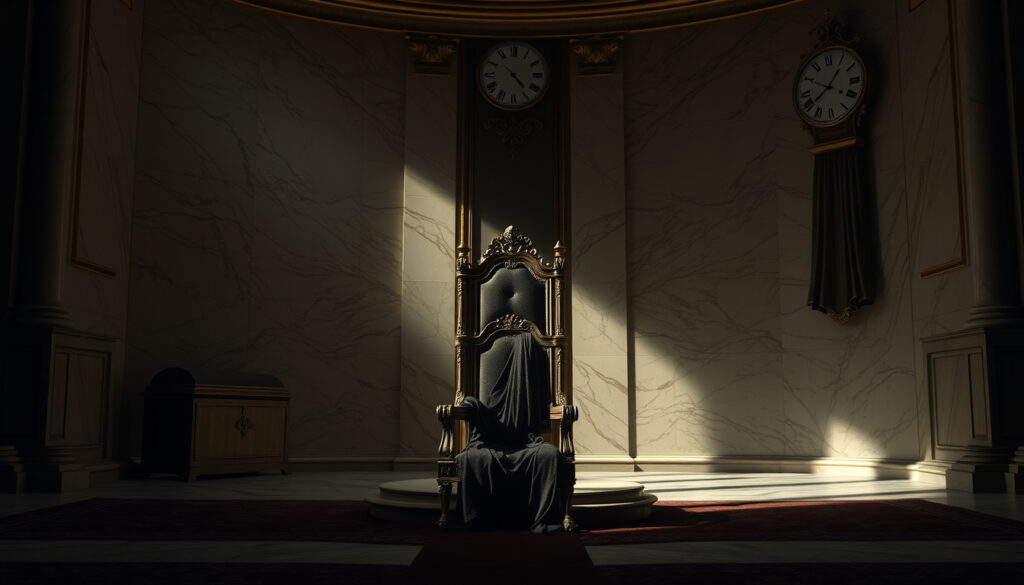
Iran Supreme Leader: Power, Succession & Funeral Mystery
When a leader dies and the successor vanishes from public view, it raises questions that go beyond protocol. That’s the situation in Iran after the death of Ayatollah Ali Khamenei in July 2026 and the appointment of his son, Mojtaba Khamenei, as the new Supreme Leader — a man who has not been seen in public since.
Current supreme leader: Mojtaba Khamenei (since 2026) ·
Number of supreme leaders since 1979: 3 ·
Date of Ali Khamenei’s death: July 2026 ·
Duration of Khamenei’s funeral: Several days ·
Age of Khamenei at death: 87 ·
Public appearances of new leader since appointment: 0
Quick snapshot
- Ali Khamenei died in July 2026 (AP News)
- Mojtaba Khamenei was appointed Supreme Leader in March 2026 (Iran International)
- The funeral lasted several days and drew millions (Al Jazeera)
- 1979: Revolution creates Supreme Leader position
- 1989: Khomeini dies, Ali Khamenei succeeds
- 2026 (March): Mojtaba Khamenei appointed
- 2026 (July): Ali Khamenei’s funeral; new leader absent
- Will Mojtaba Khamenei appear to consolidate power? (Iran International)
- Assembly of Experts may face pressure to formalize succession (Iran International)
- Potential internal dissent over hereditary rule (Iran International)
Six facts define the current state of Iran’s supreme leadership:
| Label | Value |
|---|---|
| Full name of current leader | Mojtaba Khamenei |
| Date of birth | 1969 |
| Date of accession | March 2026 |
| Predecessor | Ali Khamenei (1989-2026) |
| Age at accession | 57 |
| Known for | Low public profile |
What is a supreme leader in Iran?
The supreme leader is the head of state and the highest political and religious authority in Iran. The position was created after the 1979 Iranian Revolution, and its holder is appointed by the Assembly of Experts — a body of 88 Islamic scholars (AP News).
What are the formal powers of the supreme leader?
- Controls the armed forces, including the Islamic Revolutionary Guard Corps (IRGC).
- Appoints the head of the judiciary and half of the Guardian Council.
- Can dismiss the president with a vote of the Assembly.
- Has final say on nuclear policy and foreign affairs (Council on Foreign Relations report).
How does the supreme leader differ from the president?
The president is the head of government but is subordinate to the supreme leader. The president is elected by popular vote every four years, while the supreme leader is appointed for life. The contrast is stark: the supreme leader can veto the president’s decisions, but the president cannot overrule the supreme leader.
The supreme leader holds the real levers of power in Iran. The president manages day-to-day governance, but the supreme leader’s constitutional authority over the military and judiciary makes him the ultimate decision-maker.
The implication: any shift in Iran’s foreign or domestic policy ultimately depends on the stance of the supreme leader, not the president.
TL;DR: The supreme leader of Iran combines religious and political supremacy, controlling the military and judiciary, while the elected president manages administration but can be overruled at any time.
Who replaced Ayatollah Khomeini?
Ayatollah Ruhollah Khomeini, the founder of the Islamic Republic, died in 1989. His successor was Ali Khamenei, who served until his death in 2026. Mojtaba Khamenei then became the third supreme leader of Iran (AP News).
Is Ayatollah Khomeini still living?
No. Ayatollah Khomeini died on June 3, 1989, at age 89. His death led to the first succession crisis, which was resolved by appointing then-President Ali Khamenei as the new supreme leader.
Who succeeded Khomeini after his death?
Ali Khamenei was chosen by the Assembly of Experts in 1989. He was not a marja (grand ayatollah) at the time, which prompted constitutional changes to allow a non-marja to hold the position. He remained in power until his death in July 2026 (BBC News).
Who is more powerful in Iran, president or supreme leader?
The supreme leader holds ultimate authority over the military, judiciary, and state media. The president is the head of government but is subordinate to the supreme leader. The supreme leader can dismiss the president, a power that has never been used but remains a credible threat.
Two offices, one hierarchy:
| Attribute | Supreme Leader | President |
|---|---|---|
| Selection method | Appointed by Assembly of Experts | Popular election (every 4 years) |
| Term length | Life | 4 years (max 2 consecutive terms) |
| Control over military | Full control (IRGC, regular army) | None |
| Control over judiciary | Appoints head of judiciary | Nominates ministers, subject to parliament |
| Veto power | Can veto laws and dismiss president | No veto over supreme leader |
| Foreign policy | Final say on nuclear program, key treaties | Administers diplomacy, but under supreme leader’s oversight |
Why this matters: The supreme leader’s control over the IRGC and judiciary means he can block any policy change he opposes. The president, by contrast, is constrained by the system.
Why is Khamenei’s funeral late?
Ali Khamenei died in July 2026, and his funeral became a multi-day, multi-city event. Al Jazeera reported that the funeral began with three days of mourning in Tehran, then moved to other cities in Iran and Iraq. The burial itself was delayed, though the exact reason remains unclear.
When did Ali Khamenei die?
Ali Khamenei died on 2026-02-28, according to AP News. The exact time of death has not been officially released.
How long did the funeral last?
The funeral lasted several days. BBC News reported that the procession in Tehran drew millions, and the body was later moved to Mashhad, where Khamenei was buried.
Why was there a delay in burial?
The delay is not fully explained. Some analysts suggest it was to allow for maximum public mourning and political messaging, as Al Jazeera noted the funeral was as much a political statement as a religious one.
The funeral projected strength, with massive crowds and a multi-city procession. But the new supreme leader, Mojtaba Khamenei, was nowhere to be seen — a silence that undermines any message of solidity.
The pattern: a regime that can mobilise millions for a funeral but cannot produce its own successor is a regime with a legitimacy problem.
How rich is Ayatollah Khamenei?
Estimates of Ali Khamenei’s net worth vary widely, often in the billions of dollars. He controlled extensive economic assets through religious foundations (bonyads) and had direct oversight of the IRGC’s economic holdings. Council on Foreign Relations notes that the supreme leader’s wealth is a subject of perennial controversy inside Iran.
What is Khamenei’s net worth?
No official figure exists. Western intelligence estimates place his personal fortune at $1–3 billion, though independent verification is impossible. The bonyads under his control manage assets worth tens of billions.
How did Khamenei acquire his wealth?
Much of his wealth came through control of the Imam Khomeini Relief Foundation and other religious foundations, which operate outside parliamentary oversight. These entities own real estate, stakes in banks, and large agricultural holdings.
How did Khamenei lose his arm?
Ali Khamenei lost his right arm in an assassination attempt on June 27, 1981. A bomb hidden in a tape recorder exploded during a press conference, severely wounding him. He was then the president of Iran. BBC News recounts the event in his biography.
Is an Ayatollah like a pope?
An Ayatollah is a high-ranking Shia cleric, but the title of supreme leader in Iran combines religious and political authority in a way that has no parallel in the Catholic Church. The Pope is the spiritual head of the global Catholic Church, but he does not command a military or appoint judges to civil courts.
What is an Ayatollah?
Ayatollah (meaning “sign of God”) is a rank within Shia Islam achieved after years of theological study. Not all ayatollahs hold political power; only the supreme leader of Iran does. Other ayatollahs, like Grand Ayatollah Sistani in Iraq, exercise only religious authority.
How does the role compare to the Pope?
The Pope is the head of the Catholic Church, elected by the College of Cardinals, and holds spiritual authority over Catholics worldwide. Iran’s supreme leader, by contrast, is appointed by the Assembly of Experts and commands a state’s military, judiciary, and media. The Pope has no equivalent political power. The comparison is often made by Western observers, but it overlooks the fundamental difference: the supreme leader of Iran is a theocratic ruler, not a purely spiritual figure.
Timeline: Iran’s supreme leaders and key events
- 1979 – Iranian Revolution; position of Supreme Leader created.
- 1981 – Assassination attempt on Ali Khamenei; loses right arm.
- 1989 – Death of Ayatollah Khomeini; Ali Khamenei becomes Supreme Leader.
- 2026 (March) – Death of Ali Khamenei; Mojtaba Khamenei appointed as successor.
- 2026 (July) – Funeral of Ali Khamenei; massive public mourning; burial delayed.
What’s confirmed — and what’s still unclear
Confirmed facts
- Ali Khamenei died in July 2026 (AP News).
- Mojtaba Khamenei was appointed Supreme Leader in March 2026 (Iran International).
- Khamenei’s funeral was a multi-day event (Al Jazeera).
- Mojtaba Khamenei has not made any public appearances since appointment (TIME).
What’s unclear
- Why Mojtaba Khamenei has not appeared publicly.
- Exact cause of Ali Khamenei’s death.
- Reason for the delayed burial.
- Future of the succession process within the Assembly of Experts.
In their own words
Ayatollah Mojtaba Khamenei was appointed to the role in March, he hasn’t been seen in public since.
— New York Times reporting
Khamenei’s coffin was the focus of the funeral that drew millions.
— NBC News report
Ebrahim Raisi was once considered a candidate for succession.
— Analyst from University of Navarra (unav.edu)
For Iran’s leadership, the gap between the funeral’s display of strength and the new leader’s invisibility creates a dangerous vacuum. The regime projected unity through massive mourning, but the absence of the successor raises questions about internal stability and the legitimacy of the succession itself. For the Iranian public, the choice is clear: watch for the first public appearance of Mojtaba Khamenei, or face continued uncertainty about who really holds power.
Related reading: **Iran’s constitutional succession process and the Assembly of Experts** · **Khamenei’s funeral and Mojtaba Khamenei’s disputed public status**
youtube.com, cnn.com, facebook.com, simple.wikipedia.org, bbc.com, forbes.com, youtube.com
For a deeper look at the institutional framework behind this transition, see Irans Supreme Leader succession crisis.
Frequently asked questions
What is the official title of Iran’s supreme leader?
The official title is “Supreme Leader of the Islamic Revolution” (Rahbar-e Mo’azzam-e Enqelab-e Islami).
How old was Ali Khamenei when he became supreme leader?
He was 50 years old when he became supreme leader in 1989.
Who is Mojtaba Khamenei?
Mojtaba Khamenei is the son of Ali Khamenei and was appointed as the third Supreme Leader of Iran in March 2026. He was born in 1969 and has a background in religious studies.
What is the role of the Assembly of Experts?
The Assembly of Experts is a body of 88 Islamic scholars that appoints and supervises the Supreme Leader of Iran. It is charged with choosing a successor as soon as possible after the leader’s death.
Can the supreme leader be removed from office?
Theoretically, the Assembly of Experts can remove the supreme leader if it deems him incapable of fulfilling his duties, but this has never happened and the process is opaque.
How does the supreme leader influence Iran’s nuclear program?
The supreme leader has the final say on all nuclear policy decisions, including negotiations with world powers and the direction of uranium enrichment activities.
What is the relationship between the supreme leader and the IRGC?
The IRGC reports directly to the supreme leader, not the president. The leader appoints the IRGC’s top commanders and uses the force to enforce his policies domestically and abroad.
Meer gerelateerde berichten
 Baldur’s Gate 3 Mods: Best Picks, Installation & Context
 Lauren Spencer Smith Tour – 2025-2027 Dates and Tickets
 What Size Is a King Size Bed – US, Cal King, UK Dimensions Guide
 Daffy Duck: The Evolution of His Catchphrases and Personality
 The Fault in Our Star : Banned Book, Cancer, Sad Ending
 Candy Brothers: Net Worth, Empire & Controversy 2024
 John Davidson Tourette: Activist, Documentary, and BAFTA Incident
 Shania Twain: Career Timeline, Crossover and Record Sales