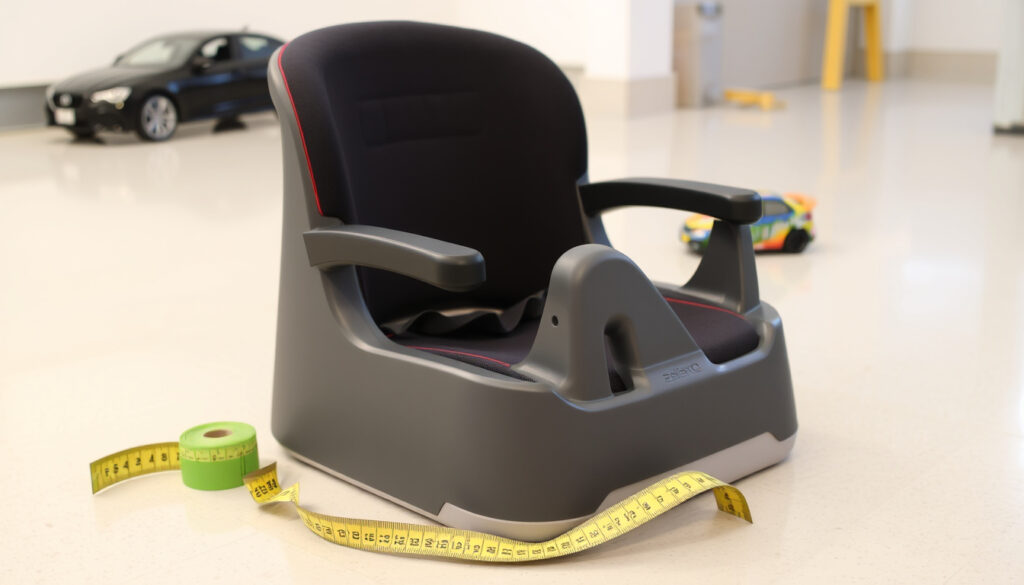
Booster Seat Age & Height Guide: Ireland & US Laws (2024)
Every parent faces that moment when their child outgrows the forward-facing car seat and a new piece of equipment enters the shopping list. The booster seat sits at the centre of one of the most confusing transitions in child car safety — not just in Ireland, where rules from the Road Safety Authority (RSA) and EU standards overlap, but also for families comparing guidance from the US and UK. This guide cuts through the contradictions with concrete numbers, legal thresholds, and a clear verdict on high-back versus backless boosters, so you know exactly what your child needs and when.
Minimum age for booster seat (Ireland): 4 years (RSA guideline) ·
Minimum height for booster seat (Ireland): 125 cm (RSA guideline) ·
Minimum weight for booster seat (Ireland): 15 kg (33 lb, UK/ROI) ·
Backless booster minimum age (NHTSA): 5 years (US, varies by state) ·
Backless booster minimum height (Chicco recommendation): 135 cm ·
Booster seat weight limit typical max: 36 kg (79 lb)
Quick snapshot
- 15–18 kg (33–40 lb)
- UK/Ireland: 15 kg (ECE R44.04)
- R129: 15 kg or 100 cm
- High-back: until 135 cm
- Backless: from 125 cm
- Both legal in Ireland
| Field | Value |
|---|---|
| Target phrase | Booster Seat |
| Primary regulator (Ireland) | Road Safety Authority (RSA) |
| Primary regulator (US) | National Highway Traffic Safety Administration (NHTSA) |
| EU safety standard | ECE R44.04 or R129 (i-Size) |
| Last updated | 2024 |
At what age should a child go into a booster seat?
RSA and NHTSA age guidelines compared
- The Road Safety Authority of Ireland advises that children can move to a booster seat from age 4, provided they also meet the minimum height of 125 cm and weight of 15 kg (RSA).
- The US National Highway Traffic Safety Administration sets a higher minimum of 5 years, though individual states may have stricter or more lenient rules (NHTSA).
- Northern Ireland, under nidirect guidance, requires a suitable child restraint up to 135 cm or 12 years, whichever comes first (nidirect).
Is age or height more important?
Height is the primary criterion in Ireland. The HSE states that the legal obligation is linked to the child’s height and weight, not their birthday (HSE). A 4‑year‑old who is already 125 cm tall is legally ready for a booster; a 6‑year‑old who is only 110 cm is not.
The pattern: age is a convenient shortcut, but height—and to a lesser extent weight—determines when a booster is safe and legal. In practice, most children reach 125 cm between ages 4 and 5.
Irish parents who wait until the child hits 125 cm (regardless of the 4th birthday) will satisfy both RSA guidance and EU regulation. US parents face a patchwork of state laws; the NHTSA’s 5‑year minimum is a conservative baseline.
What are the rules for booster seats in Ireland?
Irish law: height, weight, and type of booster required
- In the Republic of Ireland, children must use a child car seat or booster seat until they reach 150 cm in height or 36 kg in weight, whichever applies to the restraint type (HSE).
- Under ECE R44.04, a high‑back booster is approved from 15 kg (roughly 4 years) up to 36 kg. Under R129 (i‑Size), the booster must suit the child’s height, typically from 100 cm to 150 cm (Rearfacing.ie).
- The RSA video guidance emphasises that any child under 150 cm or under 36 kg must be restrained in an appropriate child seat, booster seat, or booster cushion (RSA official video).
- Taxis are exempt from the law (HSE).
Differences between backless and high-back booster legality
- Both types are legal in Ireland. New backless booster cushions, however, can only be introduced when the child weighs at least 22 kg or is 125 cm tall, according to Halfords Ireland and nidirect (Halfords Ireland; nidirect).
- High‑back boosters are allowed from 15 kg (approx 4 years) and are recommended for younger children because they provide head support and side‑impact protection (Halfords Ireland).
What this means: the law in Ireland is clear about the upper boundary (150 cm or 36 kg) but leaves room for manufacturer and retailer interpretation on the lower end. The practical consensus is that 125 cm is the key threshold for backless boosters, while high‑back models can start earlier.
Can a 4 year old use a backless booster?
When is a backless booster safe?
- A backless booster requires a minimum height of 125 cm and a minimum weight of 22 kg for new models sold after the EU directive (nidirect).
- At age 4, a typical child weighs 15–18 kg and stands 105–110 cm. Most 4‑year‑olds do not meet the backless threshold, but some do if they are tall and heavy for their age.
- Existing backless boosters still in use are acceptable if their label shows suitability for the child’s weight (nidirect).
High-back vs backless for 4‑year‑olds
- High‑back boosters offer head restraint and side‑impact protection that backless models lack. Manufacturer guidance from Chicco and Maxi‑Cosi recommends a high‑back for children under 135 cm (Halfords Ireland).
- If the vehicle does not have a proper headrest, a backless booster should not be used at all.
The trade‑off: a 4‑year‑old who meets the 22 kg weight and 125 cm height could legally use a backless booster, but safety organisations consistently advise a high‑back for the extra protection. Weight alone is not enough—vehicle compatibility matters too.
When to switch to backless booster?
Signs a child is ready for backless
- The child must be at least 125 cm tall, and manufacturers often set a higher minimum of 135 cm (nidirect).
- The child must be able to sit properly for the entire journey—no slouching, no leaning sideways.
- The vehicle seat must have a headrest that extends at least to the top of the child’s ears, or the backless booster must have its own back support (which most don’t).
Height, weight, and vehicle compatibility
- The legal minimum weight for new backless cushions is 22 kg (nidirect).
- Rearfacing.ie notes that many Irish parents wait until the child is 135 cm before moving to a backless, because at that height the adult seat belt fits correctly without a high‑back (Rearfacing.ie).
The implication: switching too early is a common mistake. A backless booster only lifts the child enough for the lap‑and‑shoulder belt to sit correctly—it does not protect the head or chest in a side impact. The NHTSA recommends keeping children in a high‑back booster until they outgrow it, which often means 135 cm or later (NHTSA).
Irish parents who switch to a backless at 125 cm and 22 kg are legal, but they are trading side‑impact protection for portability. For a child who is still growing, the high‑back remains the safer choice until the child is tall enough for the vehicle’s own seatbelt geometry to work unaided.
High-Back Boosters vs Backless Booster Seats
Three key differences separate the two types—protection, portability, and price. The table below lays out the trade‑offs for the typical Irish parent.
| Feature | High‑back booster | Backless booster |
|---|---|---|
| Head support | Built‑in headrest (side‑impact protection) | None (relies on vehicle headrest) |
| Minimum weight | 15 kg (ECE R44.04) / 15 kg or 100 cm (R129) | 22 kg (new models after EU directive) |
| Minimum height range | From 100 cm (R129) or 105 cm (typical) | From 125 cm or 135 cm (manufacturer dependent) |
| Weight limit max | 36 kg (ECE R44.04) or 150 cm (R129) | 36 kg (same) |
| Portability | Bulkier, less travel‑friendly | Light, easy to move between cars |
| Price (ROI typical) | €60–€200 | €20–€60 |
| Legal in Ireland | Yes | Yes (from 22 kg / 125 cm for new models) |
| Best for | Children under 135 cm, primary vehicle | Older children, second car, travel |
The catch: no single type is “best”—the right choice depends on the child’s height, weight, and the car. High‑back gives maximum protection for younger children; backless is fine for older, taller children in cars with good headrests.
Booster Seat Specifications (Typical Values)
Understanding the numbers printed on the box helps parents match the seat to the child’s growth stage.
| Specification | Typical value |
|---|---|
| Standards | ECE R44.04 or R129 (i‑Size) |
| Weight range (R44 high‑back) | 15–36 kg |
| Height range (R129 high‑back) | 100–150 cm |
| Weight range (backless) | 22–36 kg |
| Height requirement (backless, new) | 125 cm (EU directive minimum) |
| Manufacturer recommended height for backless | Often 135 cm (e.g. Chicco, Maxi‑Cosi) |
| Installation | Vehicle seat belt (no ISOFIX harness required) |
| Expiry (typical) | 6–10 years from manufacture date |
| Side‑impact protection (high‑back) | Integrated head wings |
| Washable cover | Most models |
Upsides and Downsides of Booster Seats
Upsides
- Lighter and cheaper than forward‑facing car seats with harness
- Simplifies transition to adult seat belt
- Backless models are easy to share between cars or use for travel
- Both types meet the same EU crash‑test standards (ECE R44.04 or R129)
Downsides
- No harness – relies entirely on the vehicle seat belt
- Backless lacks head/side protection; requires vehicle headrest
- Incorrect fit if child slouches or vehicle belt is poorly routed
- May not be suitable for children who are still very young (under 4) or short
How to Properly Use a Booster Seat (Step‑by‑Step)
- Check the thresholds. Ensure your child meets the minimum height (125 cm), weight (15 kg for high‑back, 22 kg for new backless), and age (4 years minimum per RSA). RSA guidance.
- Choose the right type. If your child is under 135 cm, pick a high‑back booster with a headrest. If your child is taller and your car has a good headrest, a backless may be sufficient. Halfords Ireland advice.
- Position the booster in the back seat. Never place a booster in a seat with an active front airbag. The middle rear seat is safest if the belt fits properly.
- Secure the booster. Place it flat on the vehicle seat. Some models use ISOFIX anchors to prevent sliding; many rely on the child’s weight and the belt to hold them.
- Buckle your child. Lap belt should lie low across the upper thighs, not the stomach. Shoulder belt should cross the centre of the shoulder and chest, not the neck or face. NHTSA proper fit guidelines.
- Check the fit. Pinch the belt at the shoulder – if you can pinch webbing, it’s too loose. Adjust until the belt is snug. AIG Ireland recommends checking every trip.
- Keep the booster until the child outgrows it. Do not switch to a seat belt alone until the child reaches 150 cm or 36 kg, whichever comes later for the specific restraint standard. HSE.
What’s Clear and What’s Uncertain
Confirmed facts
- RSA and HSE both confirm booster seat use until 150 cm or 36 kg in Ireland (RSA; HSE).
- Backless booster cushions introduced after the EU directive are legal only from 22 kg or 125 cm (nidirect).
- High‑back boosters are approved from 15 kg or 100 cm, depending on the standard (Rearfacing.ie).
- Taxi travel in Ireland is exempt from booster seat requirements (HSE).
What’s unclear
- The exact minimum age for backless boosters varies by manufacturer recommendation – some say 4, others say 5 or more.
- Enforcement of booster seat laws across different EU member states (including Northern Ireland vs Republic) is not uniform, and penalty amounts may differ.
- Long‑term injury data comparing backless to high‑back boosters for children who crash while properly belted is limited; most safety ratings rely on test dummies.
“In the Republic of Ireland, children must use a child car seat or booster seat until they are at least 150 cm tall or 36 kg. This usually means a child will need a car seat until around age 12.”
HSE
“New backless booster seats and booster cushions cannot be introduced for children shorter than 125 cm or weighing less than 22 kg.”
nidirect
“High‑back booster seats can be used by children weighing 15‑36 kg; backless models require a minimum of 22 kg.”
Halfords Ireland
“Children under 150 cm tall and under 36 kg must use a child restraint system suitable for their weight and size.”
The weight of evidence is clear: the booster seat is not optional until the child hits 150 cm or 36 kg. For Irish parents, the safest bet is a high‑back booster from the moment the child reaches 15 kg (around age 4) and keep it until the child grows past 135 cm. At that point, a backless booster can serve as a travel-friendly alternative, but only if the car has proper headrests and the child is mature enough to sit correctly.
maxi-cosi.ie, kennco.ie, safeintheseat.com, mamasandpapas.ie, thecarseatlady.com, nationwidechildrens.org
Frequently asked questions
What is the penalty for not using a booster seat in Ireland?
Drivers face fixed penalty notices and up to 4 penalty points for carrying a child under 150 cm or 36 kg without proper restraint. The fine is €120 if paid within 28 days, increasing to €180 otherwise (HSE).
Can a 6‑year‑old use a booster seat in Ireland?
Yes, if the child is at least 125 cm tall and 15 kg. Most 6‑year‑olds meet these thresholds. The RSA and HSE recommend a high‑back booster until 135 cm or age 12 (RSA).
How do I know if my child fits properly in a booster seat?
The lap belt should sit across the upper thighs, not the stomach. The shoulder belt should cross the middle of the shoulder and chest, not the neck or face. If you can pinch the belt webbing at the shoulder, the fit is too loose (NHTSA).
Are booster seats reusable?
Yes, but they have an expiration date (usually 6–10 years from manufacture). Do not use a booster that has been in a moderate or severe crash (NHTSA).
Can I use a booster seat without a back?
Yes, as long as your vehicle has a headrest that extends to at least the top of your child’s ears, and the child weighs at least 22 kg (new models) and is at least 125 cm tall (nidirect).
What is the difference between a booster seat and a car seat?
A car seat usually has a 5‑point harness and is used from infancy. A booster seat positions the vehicle’s seat belt correctly for older children and does not have its own harness. The booster is the final stage before the adult seat belt.
Do booster seats expire?
Yes. Most manufacturers stamp an expiration date on the plastic shell. Even without a date, a booster should not be used more than 6–10 years from the manufacture date, because plastic degrades with heat and wear (NHTSA).
Related reading
- Glasgow to Edinburgh Train – transport options within the UK and Ireland context.
- When Will WASPI Get a Decision – 2026 Update and Timeline – policy timelines affecting UK and Irish households.
Meer gerelateerde berichten
 Elvis Costello: Biography, Illness, Hits & Facts
 How to Make Mac and Cheese – Creamy Stovetop Recipe Guide
 Fetal Alcohol Syndrome Face: Signs and Features Explained
 Snag Tights Discount Code: Verified Coupons & Free Shipping
 HIFU Before and After – Results Timeline and Expectations
 Tyne and Wear Metro – Guide to Routes, Tickets and Timetables
 Black and White Wallpaper: Does It Make a Room Look Bigger
 CMF Phone 2 Pro Review (2026): Is It Still Worth Buying?