HIFU Before and After – Results Timeline and Expectations
High-Intensity Focused Ultrasound, commonly known as HIFU, has emerged as a popular non-surgical approach to facial rejuvenation. The procedure uses focused ultrasound energy to stimulate collagen production deep within the skin, promising gradual tightening and lifting effects without needles or scalpels. For those considering the treatment, understanding what happens before and after HIFU sessions represents one of the most common areas of inquiry.
Patients exploring HIFU often seek clarity on realistic outcomes, expected timelines, and how their appearance might change over the months following treatment. While the concept sounds straightforward, the actual results unfold progressively, with visible improvements typically emerging weeks after the initial session rather than immediately. This delayed response reflects the biological process of collagen remodeling that drives the treatment’s effects.
Understanding the HIFU journey from initial consultation through final results helps prospective patients develop appropriate expectations and make informed decisions. The following guide draws on clinical research and patient outcomes to provide a comprehensive overview of what individuals might experience throughout their HIFU transformation.
What Do HIFU Before and After Results Look Like?
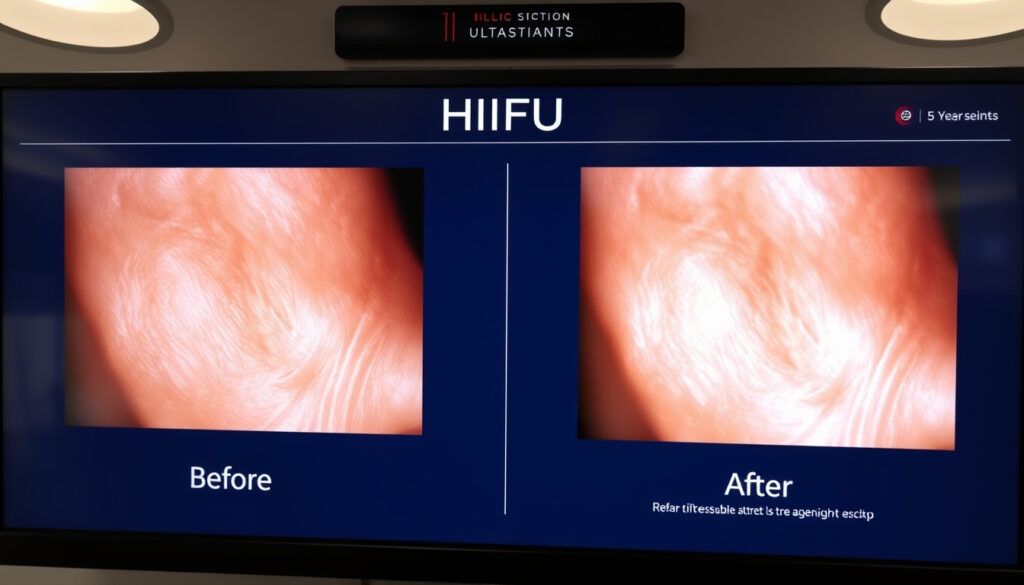
HIFU outcomes manifest differently across individuals, but certain patterns emerge consistently across patient populations. The visual changes span multiple facial areas, with the jawline, cheeks, and neck showing some of the most noticeable improvements. Before treatment, patients typically present with varying degrees of skin laxity, fine lines, and diminished facial contour. After HIFU, the same individuals often exhibit firmer tissue, improved facial definition, and softened wrinkles.
Mild redness and slight swelling appear in the treated areas. These effects resemble a light sunburn and resolve within one to two days.
Collagen remodeling accelerates, producing visible tightening. Most patients notice significant improvements in skin firmness and facial contour during this period.
Peak results become apparent as new collagen fibers mature. The face appears more defined with improved elasticity and natural-looking lift.
Results typically persist for 12-18 months, with proper skincare and maintenance extending benefits up to approximately one year in many cases.
Key HIFU Insights
- Clinical studies demonstrate that skin elasticity improves measurably by week four following treatment, with continued refinement through the subsequent months
- Approximately 85% of individuals report satisfaction with their HIFU outcomes, according to patient surveys
- A study involving 75 patients found that 86% felt happy with their jawline results and 93% noticed their faces appeared better at both three and six months
- Around 71% of patients appreciate how their face appears slimmer following treatment
- Dermatologists in clinical settings have rated improvements at 80% or more in nasolabial folds, jawline, and neck areas
- The procedure produces natural-looking results that develop gradually rather than creating dramatic, artificial changes
- HIFU triggers the body’s own collagen production mechanisms rather than introducing foreign substances
| Treatment Parameter | Typical Value |
|---|---|
| Session Duration | 30-90 minutes depending on treatment areas |
| Downtime Required | Minimal to none |
| Visible Results Begin | 2-3 months post-treatment |
| Peak Results Achievable | Approximately 6 months |
| Number of Sessions Typically Needed | 1-2 annually |
| Cost Range | $1,500-$5,000 depending on provider and location |
| Effect Duration | 12-18 months with maintenance |
| Pain Level Reported | Generally manageable with mild discomfort |
How Long Do HIFU Results Last and When Will I See Them?
The temporal aspect of HIFU outcomes represents one of the most important considerations for prospective patients. Unlike surgical procedures that produce immediate changes, HIFU relies on the body’s natural healing processes, meaning results accumulate gradually over time. This biological mechanism shapes both the timeline for visible improvements and the ultimate duration of benefits.
Understanding the Results Timeline
The progression from initial treatment to final results follows a predictable pattern, though individual experiences vary based on factors such as age, skin condition, and lifestyle habits. Most patients begin noticing subtle changes within the first weeks, with more pronounced improvements emerging as collagen production ramps up. Researchers studying cosmetic dermatology procedures have documented these patterns across diverse patient groups.
- Day of Treatment: The session itself causes minimal visible change. Patients may feel warmth or tingling as ultrasound energy penetrates deep skin layers, but the aesthetic effects await the remodeling process ahead.
- Week 1: Mild skin tightness develops, particularly around the jawline and cheeks. Some patients experience slight redness or swelling that typically resolves within one to two days.
- Week 4: Clinical measurements show improvements in skin elasticity, wrinkle depth, and pore size. A split-face study with 21 participants documented these measurable changes at this stage.
- 2-3 Months: The turning point arrives as most visible changes become apparent. Patients commonly report a firmer jawline and cheek contour, softer fine lines around the mouth and eyes, smoother neck texture, and improved overall skin quality. During this period, collagen actively remodels and patients frequently receive unsolicited comments about looking well-rested.
- 6 Months: Peak tightening and contouring effects become apparent. The face appears more defined with improved elasticity, and results feel natural rather than overdone. Clinical observers documented visible changes in nasolabial folds, jawline, and neck areas, with dermatologists rating improvements at 80% or more.
- 12+ Months: Results continue to evolve as collagen matures. Benefits can extend through one year or longer with proper skincare, though some gradual decline in effects occurs over time.
Research indicates that higher treatment doses correlate with longer-lasting results. Patients receiving full doses maintained benefits for a full year, while those receiving lower doses showed some fading after the 12-month mark. Discussing dosage options with your provider helps optimize outcomes for your specific goals.
Factors Influencing Result Duration
How long HIFU results persist depends on multiple individual factors. Lifestyle choices including sun exposure, smoking, and skincare routines all influence longevity. Age plays a role as well, with younger patients often experiencing more robust collagen responses. Many practitioners recommend yearly touch-up sessions to maintain optimal results, similar to regular facial maintenance routines.
What Are Common HIFU Side Effects?
Understanding potential side effects helps prospective patients prepare for their HIFU experience and distinguish normal post-treatment responses from concerning developments. The procedure enjoys a strong safety profile when performed by qualified practitioners, though some temporary effects commonly occur.
Expected Temporary Effects
Most patients experience only mild side effects that resolve without intervention. These temporary responses reflect the body’s natural reaction to focused ultrasound energy penetrating deep tissue layers. The sensation and visible signs patients encounter during and after treatment typically fall well within manageable ranges.
- Mild redness in treated areas, resembling light sunburn
- Slight swelling that may persist for a day or two
- Light tingling or warm sensations during the procedure, often described as tiny zaps
- Temporary numbness or sensitivity in specific spots
- Mild bruising in rare cases
Clinical sources confirm that these effects typically fade within one to two days following treatment. Discomfort during the procedure is generally manageable, though patients should communicate with their provider if they experience significant discomfort. The sensation varies by individual pain tolerance and the specific areas being treated.
When to Consult a Provider
While serious complications remain rare, certain symptoms warrant professional assessment. Patients experiencing pain that persists beyond the expected recovery window, swelling that worsens rather than improves, or any signs of infection should contact their healthcare provider promptly. Qualified practitioners will discuss these considerations during the consultation phase and provide clear post-treatment care instructions.
HIFU vs Ultherapy: How Do Results Compare?
Both HIFU and Ultherapy utilize focused ultrasound technology to stimulate collagen production, yet important distinctions exist between these treatments. While the research materials focus primarily on HIFU outcomes rather than direct comparisons, understanding the general landscape helps prospective patients contextualize their options.
Technology and Approach Differences
HIFU represents a category of devices that may include various manufacturers, while Ultherapy is a specific FDA-cleared device with established clinical documentation. Both deliver focused ultrasound energy to deep skin layers, targeting the same foundational tissue structures. The key variables include treatment depth, energy settings, and the specific protocols employed by different providers.
Results from both approaches depend substantially on individual patient factors and the skill of the practitioner performing the treatment. Clinical studies cited in HIFU research demonstrate measurable improvements in skin elasticity, wrinkle depth, and facial contour, though direct comparative data would require additional specialized sources for comprehensive coverage.
Setting Realistic Expectations
Whether choosing HIFU, Ultherapy, or another non-surgical approach, patients benefit from understanding that these treatments work gradually through natural biological processes. The collagen remodeling that drives results takes time to develop, meaning visible improvements emerge over months rather than appearing immediately after treatment.
What’s Proven vs Variable in HIFU Results
- Clinical studies demonstrate measurable skin tightening effects
- Collagen production increases following treatment
- Results develop gradually over 2-6 months
- Peak effects typically occur around 6 months
- Benefits can last 12-18 months with maintenance
- Approximately 85% patient satisfaction rate reported
- Mild temporary side effects are common but resolve quickly
- Individual response rates vary significantly
- Duration depends on lifestyle and skincare practices
- Results differ based on age and skin condition
- Treatment dosage affects longevity of outcomes
- Specific area response may differ between patients
- Number of sessions needed for optimal results
- Long-term results beyond one year require more study
Understanding HIFU: The Science Behind the Results
HIFU technology delivers focused ultrasound energy to precise depths within the skin, bypassing the surface layer entirely. This energy creates controlled thermal points that trigger the body’s natural wound healing response. The targeted tissue heats briefly to temperatures that stimulate cellular activity without damaging surrounding areas.
What follows represents a cascade of biological events. Fibroblasts, the cells responsible for collagen production, receive signals to increase their activity. New collagen fibers begin forming and organizing along treatment lines. Over subsequent weeks and months, this newly produced collagen gradually replaces older, less structured tissue, resulting in tighter, firmer skin.
The depth of HIFU treatment sets it apart from many other non-surgical options. By reaching the superficial muscular aponeurotic system layer, the same tissue targeted during surgical facelifts, HIFU achieves results that previously required invasive procedures. This deep stimulation explains why outcomes develop gradually rather than immediately.
Research and Sources
Clinical evidence supporting HIFU effectiveness comes from multiple sources examining patient outcomes across different populations. Studies involving 75 participants documented visible changes in nasolabial folds, jawline, and neck within three months of a single session. A split-face study with 21 people demonstrated measurable improvements in skin elasticity, wrinkle depth, and pore size by week four following treatment.
Research demonstrates that new collagen formation appears by three months, with continued improvements extending to six months and sometimes one year. Patients receiving higher doses maintained results for a full year, while lower doses showed some fading after the 12-month mark.
Healthcare authorities including dermatology organizations provide guidance on appropriate use of these devices. Patients considering HIFU should verify their provider’s qualifications and discuss realistic expectations based on their individual circumstances.
Next Steps for HIFU
For those who have reviewed the HIFU before and after evidence and decided to pursue treatment, several practical steps can help ensure the best possible outcomes. Thorough preparation and informed decision-making contribute significantly to patient satisfaction.
- Research Qualified Providers: Verify that your chosen practitioner has appropriate training and experience with HIFU devices. Review before and after photos from their actual patients rather than generic stock images.
- Schedule a Consultation: Discuss your specific goals and concerns during an initial appointment. A qualified provider will assess your skin condition and recommend appropriate treatment areas and dosage levels.
- Review the Timeline: Plan your treatment around any upcoming events, understanding that visible results develop over several months rather than immediately.
- Prepare for Recovery: While downtime remains minimal, schedule treatment when you can allow any temporary redness or swelling to resolve privately.
- Establish Maintenance Plans: Discuss follow-up treatment schedules with your provider to maintain optimal results over time.
For those exploring broader wellness topics alongside cosmetic procedures, examining related subjects such as Is Guinness Good for You – Nutrition Facts, Benefits and Risks can provide additional context for healthy lifestyle choices that support skin health from within.
How much does HIFU cost?
Treatment costs typically range between $1,500 and $5,000 depending on geographic location, provider experience, and the number of areas treated. Most patients require only one or two sessions annually.
Is HIFU painful during treatment?
Discomfort varies by individual tolerance and treatment area, but most patients describe sensations as manageable warmth or light tingling. Providers can adjust settings if significant discomfort occurs.
Can HIFU ruin your face?
Serious complications from HIFU remain rare when performed by qualified practitioners. The procedure has an established safety profile, though choosing an experienced provider reduces any risk.
Is HIFU permanent?
Results are not permanent but typically last 12-18 months. Maintenance sessions yearly help preserve optimal outcomes over time.
How soon after HIFU can I resume normal activities?
Most patients return to normal activities immediately, though mild redness or swelling may persist for one to two days. Your provider may recommend avoiding certain activities temporarily.
Does HIFU work immediately?
No, HIFU does not produce immediate results. Visible improvements develop gradually as collagen remodels, typically becoming noticeable around the 2-3 month mark with peak results around 6 months.
How is HIFU different from Botox?
HIFU stimulates natural collagen production to tighten and lift tissue, while Botox relaxes muscles that cause wrinkles. These treatments address different aspects of facial aging and may be used complementarily.
Meer gerelateerde berichten
 Boat Race 2025 Time: Start Times, TV Channel & Results
 Chitty Chitty Bang Bang: True Story, Slang, and Parents Guide
 Buster Merryfield: WWII Veteran, Bank Manager, and Uncle Albert
 Rock Orchestra by Candlelight: 2026 Dates, Reviews & Setlist
 Rick Moranis: Why He Quit Acting and What He’s Doing Now
 3I/ATLAS Update Today: Status, Signal & Closest Approach
 Armani Luminous Silk Foundation: Best for Mature Skin?
 Adrian Dunbar Movies and TV Shows: Complete Career Guide